


an afternoon in Warsaw
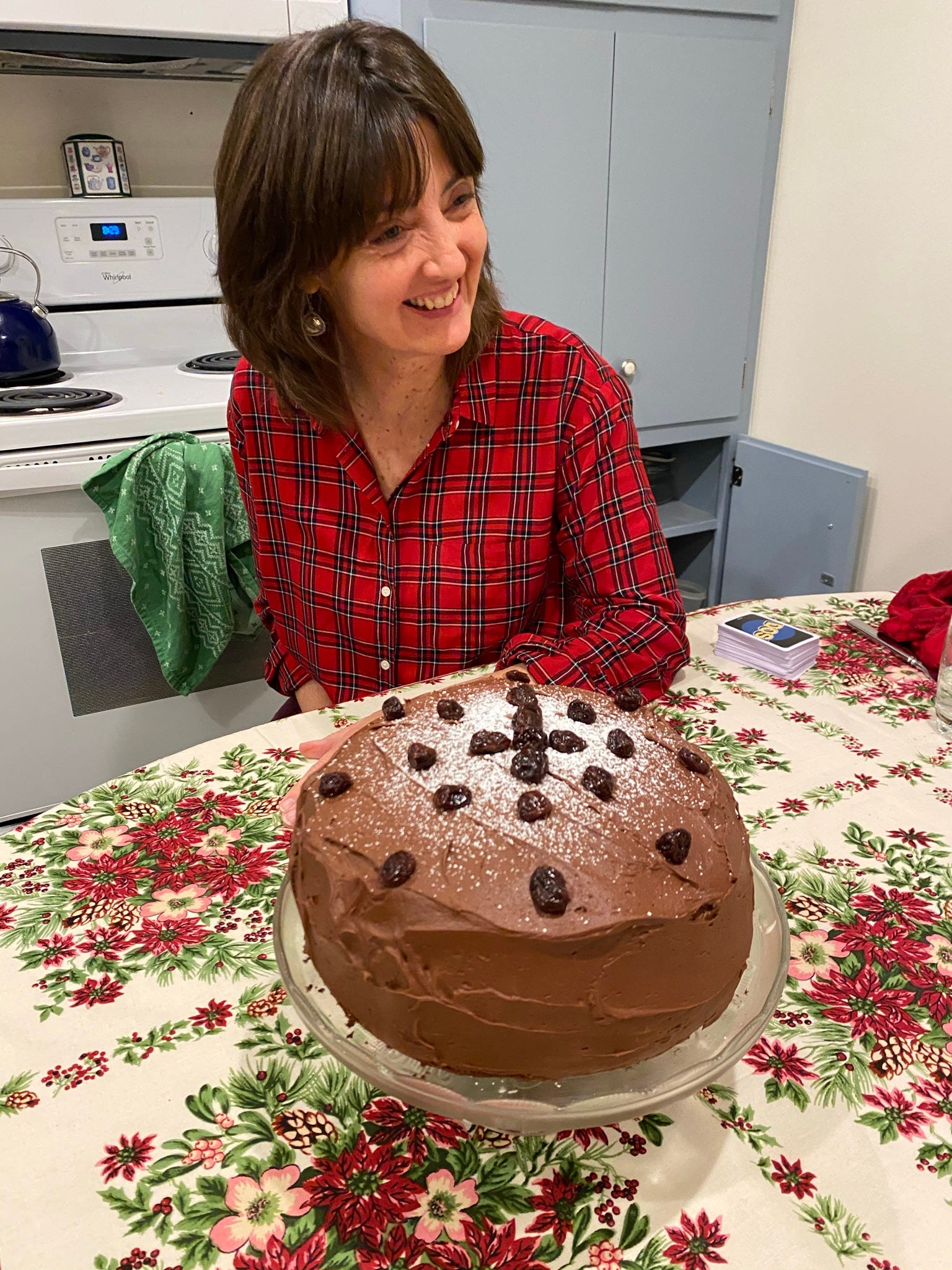
My mother is a retired speech and language pathologist who worked in Oregon public schools her entire career. As her son, I have always appreciated language and communication, but as a native English speaker, I’ve had the privilege of entering most spaces unimpeded by language. However, as a globalist, I believe that pushing through language barriers facilitates an essential dialogue that when nurtured, can form powerful, even world-changing, connections
.
The first friend I made on this trip to Europe was Lynn, an energetic 26 year-old living in Warsaw, Poland. Lynn is a trans dude and polyglot on the autism spectrum. As my mother would say affectionately, Lynn is “aspy” as fuck (the profanity is on me).
Driving from the airport to their family home was a riot, and I would soon find out that we were riding in his mom’s Honda Element because two years ago Lynn’s mini cooper was T-boned and totaled by a motorcycle. According to Lynn’s retelling of what followed the car accident - a criminal court case that is still ongoing - Poland’s judicial system doesn’t instill much confidence.
Lynn’s mom is a producer at studio kakadu, a private media company with a rightward slant resembling Fox News. After a quick tour of the studio, I was treated to a traditional sour soup with sausage and horseradish.

Two motor mouths, Lynn and I covered cross-cultural topics including politics, the LGBTQ+ experience, media, and crucially, our pets. Sponsored by Claritin D, I met all four of Lynn’s furry friends, Cinnamon Garfield, Junior, Buckshot, and Fidel.
Lynn’s human family support the center-right party, “peace, law and justice”(PiS), while he supports the minority Labor party on the left. Both the left and center-right disavow the far-right Confederation, Liberty, and Independence (Konfederacja) party’s extreme antisemitism and homophobia, but the electoral success of PiS hinges on a rural voter base that it fears will unite behind the far-right. Recent polls show Karol Nawrocki, the PiS Presidential candidate, just ahead of Slawomir Mentzen, leader of the far-right Konfederacja party. Aiming for second place and the opportunity to compete in a runoff against progressive Warsaw Mayor Rafal Trzaskowski, the Civic Platform (CP) nominee, Nawrocki has echoed Mentzen’s anti-Europe, pro-Russia messaging. Criticizing Ukraine as “ungrateful,” stealing a line from Papal Assassin1 JD Vance, Nawrocki’s pandering to euro-skeptical voters may come back to bite him in a run-off. Centrist Poles may reject Nawrocki as a Putin sympathizer who would threaten Poland’s security by isolating the country from its democratic allies in Europe.
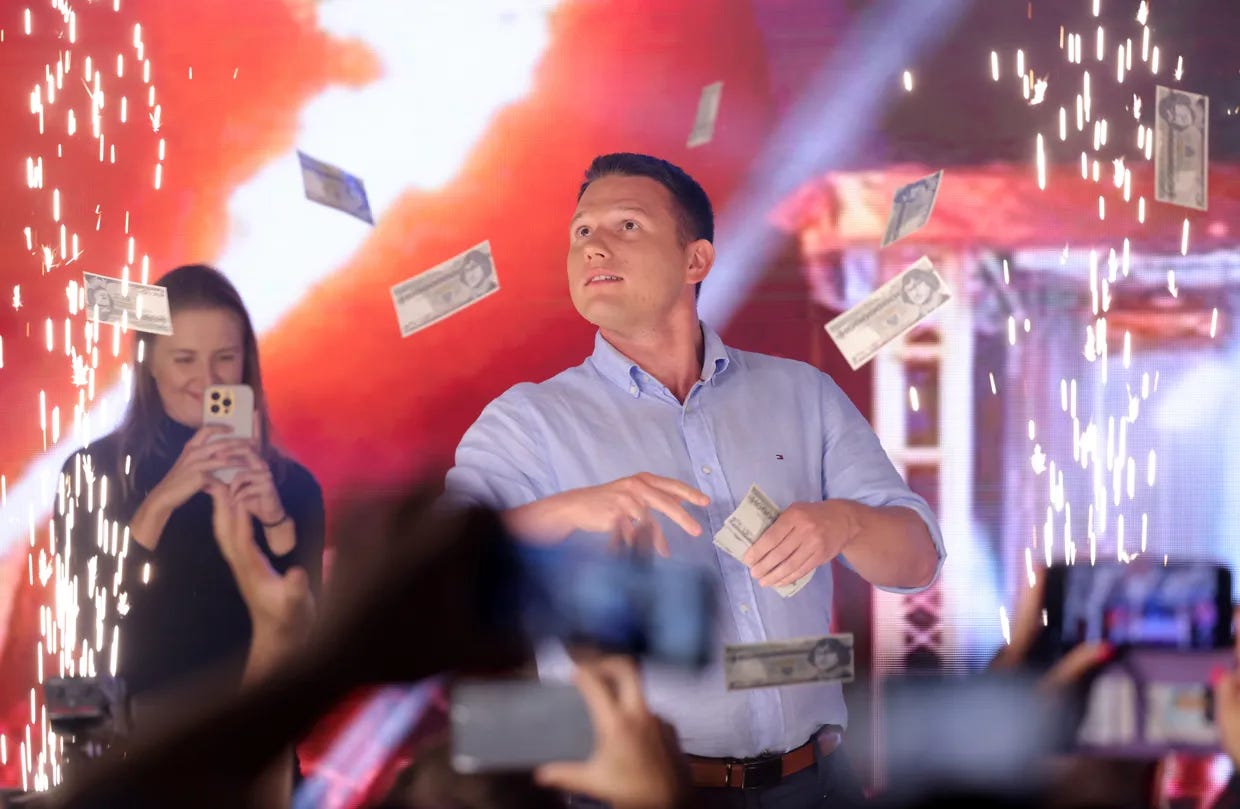
Poland’s well-established state media apparatus, and its history of partisan interference, has elevated media oversight as a priority policy issue for Presidential campaigns.
Members of the public who see journalistic independence as a pillar of democracy have reason to be skeptical of media trustees installed by politicians. PiS supporters cried foul when the CP takeover of state-owned media, which Lynn claims was a justified and necessary reform, even if legally dubious. In his Polish Politics blog, Aleks Szczerbiak questions what is at stake in the dispute over Polish state-owned media.
‘De-politicising’ Polish state-owned media outlets was one of the [CP] party’s main election pledges. They argued that during Law and Justice’s period in office the taxpayer-funded media outlets, especially TVP’s news and current affairs programs, had violated their statutory duty to provide services that were pluralistic and impartial, turning the state-owned broadcasters into crude ruling party propaganda channels. They said that this point had been made repeatedly by international bodies such as the Organization for Security and Co-operation in Europe (OSCE) election monitoring missions, while the CBOS polling agency found that public trust in state TV’s news output had fallen to its lowest ever levels.2
I expressed envy founded in the frustration that many American progressives feel toward liberal Democrats who tie their hands with legal norms before getting knocked out in fights with conservative Republicans who have no respect for the rule of law. As Trump decimates public media institutions like PBS and Voice of America, our youth will suffer from the absence of moral wisdom imparted by voices like Fred Rogers and Elmo. This is likely the point, though. Stop children from feeling empathy for others, and indoctrinate selfishness such that collectively-achieved societal progress is dismissed as futile. When Trump’s reign inevitably comes to an end, those committed to strengthening independent media institutions should follow the lead of Poland’s Civic Platform party and implement bold reforms. Until ultranationalist propaganda loses its time slot, we will be hard pressed to find a common truth based in fact.
train to the Poland-Ukraine border
On the train from Warsaw to Hecht I sat across from a quiet woman traveling solo. When I woke up from a nap, we broke the silence and I discovered she was fluent in English. Lucky me! Amused by an American traveling to a conflict zone, she shared her first-hand experience living in the suburbs of Kyiv under the constant bombardment of drones and missile strikes. In return, I was able to share my Western perspective on the war that kicked off in 2014 with the annexation of Crimea.
My train buddy thoughtfully contextualized Ukraine’s three-decade history of democracy. Ukraine established independence in 1991, but its sovereignty was quickly constrained by more powerful states. She called this Ukraine’s “greatest mistake.” I learned that Ukraine’s tragic circumstances today stem from a clear root cause: the Budapest Memorandum. The 2014 annexation of Crimea and full-scale invasion in 2022 was written on the wall shortly after Berlin’s crumbled.
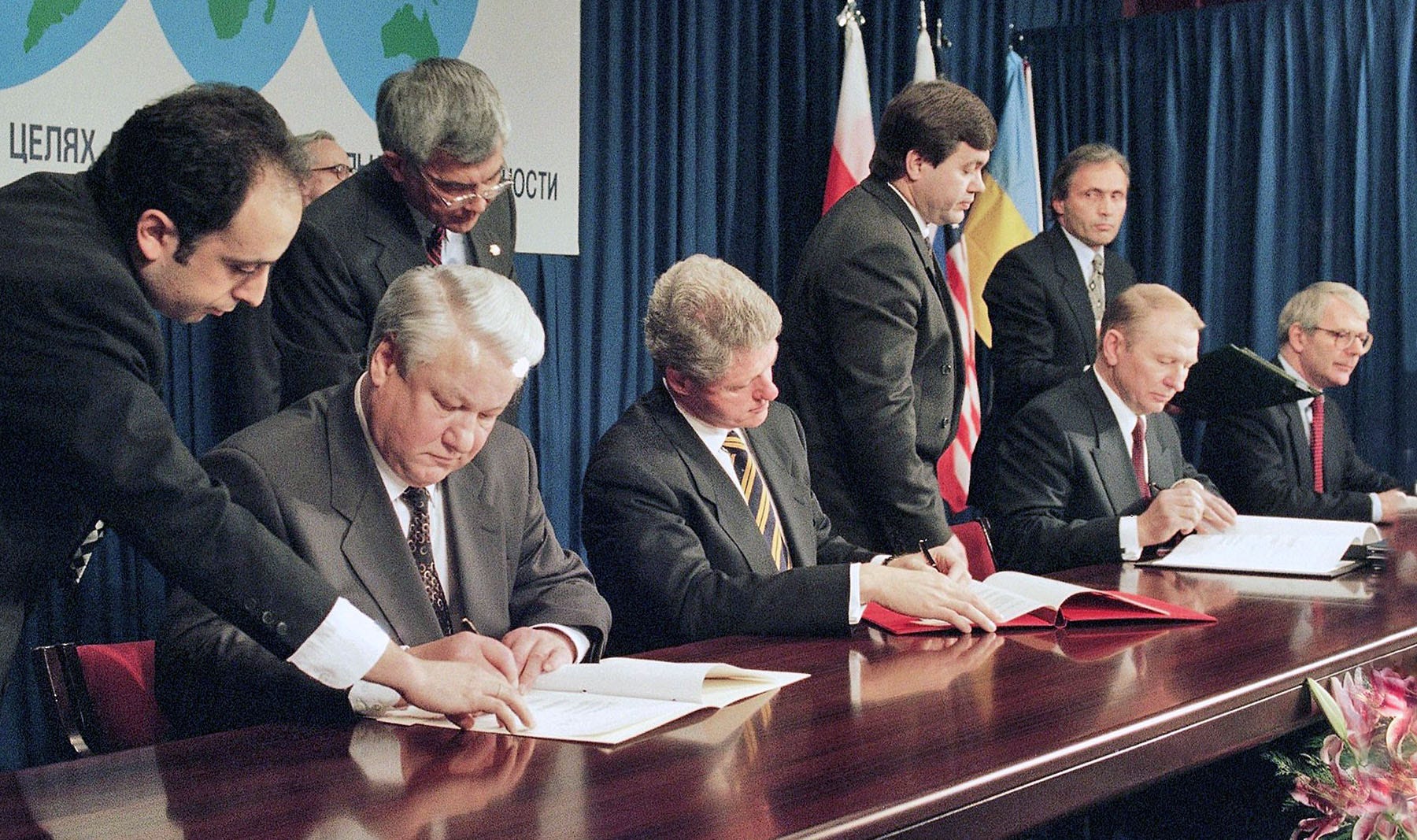
On December 5, 1994, the same month I was born, Ukraine’s President Leonid Kuchma co-signed the Budapest Memorandum alongside US President Bill Clinton, UK Prime Minister John Major, Russian President Boris Yeltsin, and Khazakstani and Belarusian heads of state.3 In the noble name of denuclearization, Ukraine agreed to zero-out its nuclear stockpile, which was the third largest in the world behind the US and Russia at the time. Ukraine knew that denuclearization would add national security risk, which is why the US, UK, and Russia coupled nuclear weaponry reduction with security promises.4
Hearing this history relayed to me from the Ukrainian perspective, I had a bubble-bursting epiphany. The United States is directly responsible for Ukraine’s insecurity and the horrific human rights violations perpetrated by the Russian state in Ukraine. It’s not only in our democratic and national security interest to support Ukraine’s victory, it’s a duty we have largely abdicated.
In 2013, President Obama’s government justified sanctions against Belarus for human rights abuses, claiming that the 1994 Memorandum was not legally binding. If the US was not legally bound by the memorandum, why would Russia be? The next year Russia annexed Crimea, shocking Western audiences who had consumed media that consistently painted Putin as a transformational and liberalizing leader. We were duped by Russian propaganda that continues to plague our political system today.
Twenty Years of Putin Playing the West in 3 Minutes | NYT OpinionGoing down a rabbit hole of US politics, I described the modern era of congressional gridlock, our “first-past-the-post” electoral system, and the unprecedented danger of Trump’s second term to civil liberties and the rule of law.
As a student of US politics and government, my teachers consistently characterized American democracy as exceptionally diverse. Multi-racial democracy, they argued, presents unique challenges. After all, our founding fathers’ assertion that all men are created equal was an idealistic principle, not an input. Throughout our history, constitutional amendments enfranchised Black people, other minorities, and women, arcing our country toward the ideals of equality and justice by rejecting nativism and eugenics-based hierarchy.
Rooted in racial and gender resentment, MAGA stands for the disenfranchisement of minority groups and women who have gained political representation and power over the past 80 years.
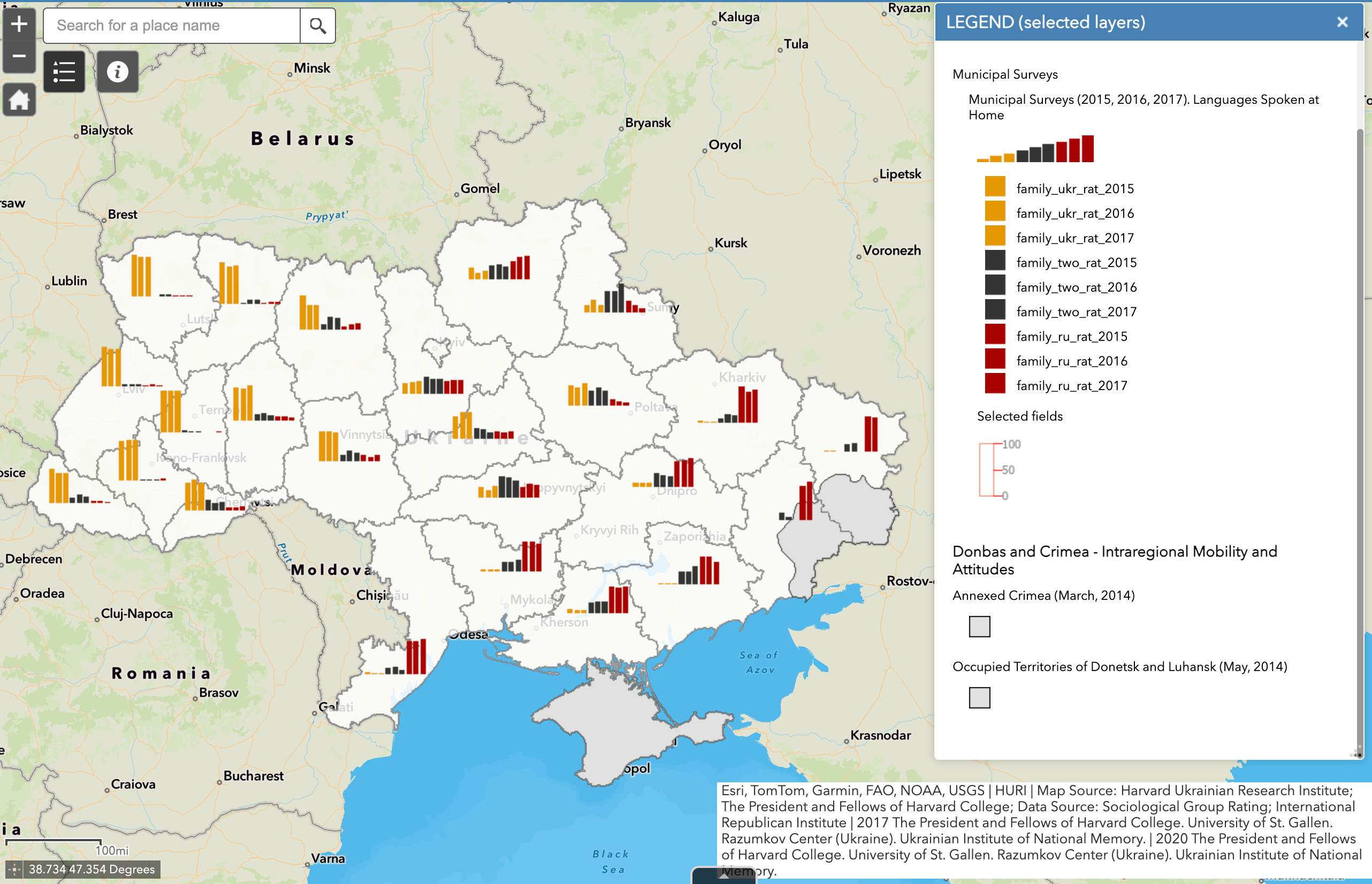
Setting aside the notion that America is unique in our multiracialism, we can learn from the strength of Ukrainian democracy. In Kyiv, elected officials are tasked with representing a multi-ethnic population that speaks several languages. The home-spoken language of Ukrainians correlates with both generational and geographic factors. Those who grew up in soviet-era Ukraine are more likely to speak Russian, while those under age 40, who attended school “post-Ukrainization,” are more likely to speak Ukrainian and English. Latching onto natural divisions, Russia has deliberately stoked domestic unrest by pitting Russian-speaking Ukrainians against those who support the democratic government in Kyiv. As Putin annexed Crimea, the Kremlin inserted chaos agents into eastern regions of Donetsk and Luhansk, home to many Russian-speaking Ukrainians. The map below depicts languages spoken at home in each region based on 2015-17 municipal survey data, not including data from annexed Crimea.
train to Kyiv
In Hecht my new friend and I parted ways into sleeper train cars for the long journey across the border toward Kyiv. Squeezing my bags through the narrow passage to my assigned cabin, I met my bunkmate Yosef, an elderly German-speaking man. We were able to communicate with hand gestures as we stowed luggage and helped one another prepare our beds. Next came Raymon and Katarina, Russian-speaking Ukrainians from the Kharkiv region. Raymon knew a some English phrases, and these two were comfortable using the google translate app to kindly engage with me.
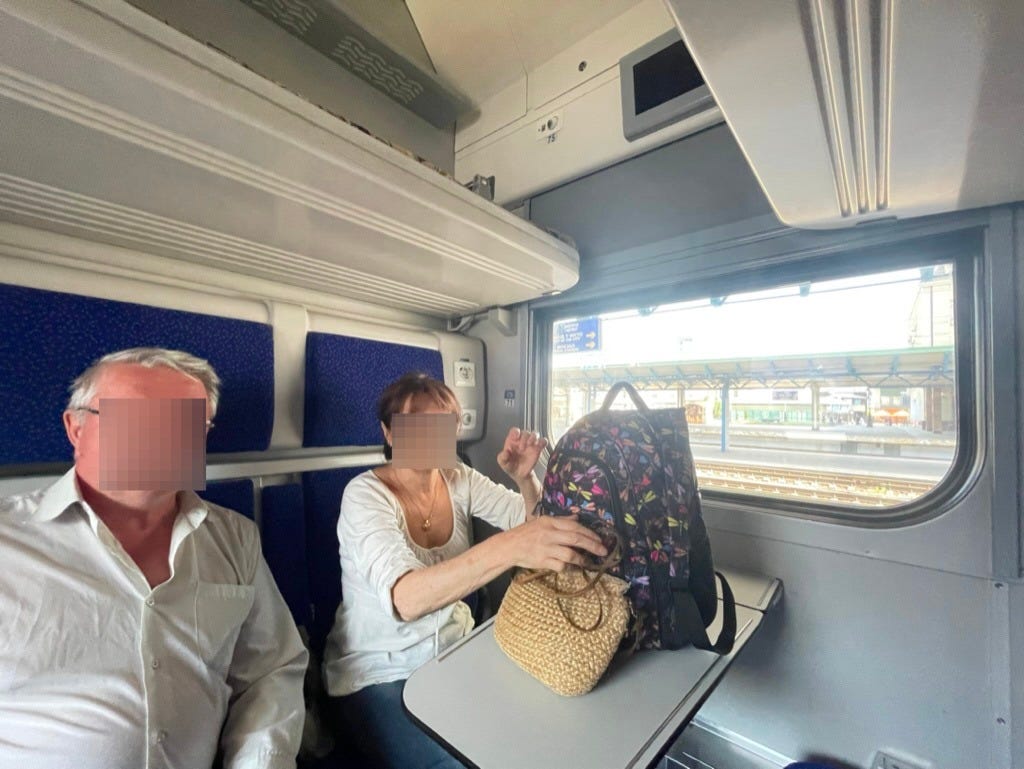
After crossing two border checkpoints in the middle of the night, I woke up to the news that an overnight Russian assault on Kyiv killed 13 civilians in cold blood. Katarina showed me a video of explosions, to which I sheepishly asked, “Kyiv?” She nodded. I arrived in Kyiv around noon and was picked up by my boss Leathers and our colleague Dennis.
Dennis, a Kyiv local, is a popular guy, his phone constantly abuzz. His one-handed driving skills were impressive, a master multitasker. I could pick up a few Ukrainian words here and there as he bantered with his younger “witchy” sister Veronika, whose reputation preceded her. I knew we’d get along.
“Nika” graciously met met at the office and brought me to her parent’s apartment on the Eastern bank of the Dnipro river, where I showered off my long journey and sat down to a delicious home-cooked meal and leftover Easter cake for dessert. For second dessert, Nika and Dennis’s mother brought fresh apple and orange slices to my room while I was FaceTiming my own mother. Though Nika’s parents speak Russian, gratitude expressed from one mother to another did not require common tongue to be communicated.
waking up in Kyiv
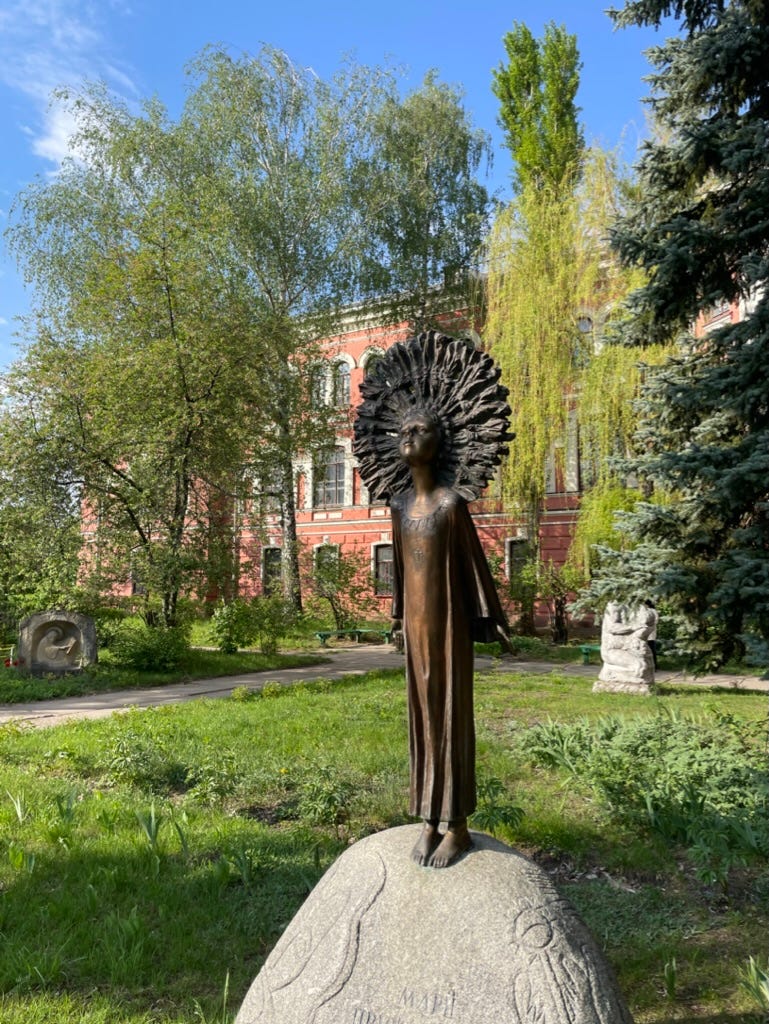
The next morning Nika picked me up and took me to the mall to purchase an electronic sim card. An excellent English speaker and professional translator, Nika helped me with Ukrainian pronunciations as I attempted to chat with workers, finding limited success. After Nika hooked me up at the phone store, we exchanged stories over coffee and brainstormed how we can collaborate in developing Ukraine Torch’s media vertical. Nika was sporting an oversized color-blocked yellow and blue tee and jeans, an iconic Gen-Z look.
The Kremlin propaganda machine leverages targeted and sometimes conflicting messaging to influence audiences in their own language. Language itself has been the focus of many disinformation campaigns carried out by Russia, which claims that Ukrainization, or the promotion of Ukrainian language, is a government effort to erase Russian identity. In reality, promotion of Ukrainian language seeks to preserve a Ukrainian culture that has been brewing in the melting pot of Kyiv for centuries, predating Moscow.
To Ukrainians, equating Russia with the “new” USSR is equivocating; both are post-soviet countries, but Russia has usurped the political power of the USSR. This is particularly evident at the UN, where Russia has claimed and occupied the USSR’s permanent seat on the security council, undermining the council’s purpose of global stability and peace by perpetrating violence and war crimes. I recalled that in the 90’s, when my teachers unrolled outdated maps at the front of the classroom, they would say “the USSR does not exist anymore… now it’s called Russia.” In retrospect, I recognize how this oversimplification miseducated my generation.
Russian occupation of Eastern Ukraine and the Crimean Peninsula underscores a concerted effort to rebuild the USSR empire, Putin’s primary policy objective. Forced to acquire Russian passports in order to renew housing access, Ukrainians under Russian occupation must comply or risk incarceration in dismal prison and labor camps. Tens of thousands of Ukrainian children have been kidnapped and trafficked to Russia, while tens of thousands more are re-educated with lessons that falsely rewrite Ukraine’s history.5
Americans who stand to benefit from patriarchy and white supremacy are targeted with anti-black, anti-immigrant, anti-woman propaganda that promises to restore regressive power structures. The story of national rebirth that returns the US to a “golden era” is repeated ad nauseam to justify mass-deportation, incarceration, and the violation of civil rights and bodily autonomy.
Like in the United States, Russia’s ultranationalist movement fights its battle in schools, aiming to reverse generational progressivism. Asserting dominance over minority ethnic groups, Putin’s fascist regime disappears those who dissent and resist. State-run media outlets like Sputnik and Russia Today reinforce Putin’s narrative and dismiss counter-narratives as Naziism. These “cyber influence” campaigns, as described by Microsoft’s Threat Analysis Center, have been underway in eastern Ukraine and Crimea for decades, framing Russian-speaking Ukrainians as victims who should rebel and reunite with their neighbors to the East.6 These same pro-Russia headlines are amplified by conservative news outlets like Fox, One America Network, and The Washington Examiner, reaching Western audiences. In 2024 the DOJ released a report that exposed right-wing influencers who were paid by Russia to spread propaganda.7
Over time, anti-Ukraine messaging found open ears, and separatist movements in the East established a foothold. Unable to spark a home-grown revolt, in 2022 Putin bet the bank on a full-scale military invasion, a last-ditch effort to demonstrate regional power and dominance over Ukraine. However,Russia overestimated the effectiveness of its propaganda machine. Expecting Ukrainians to cheer on their own demise, Kremlin group-think concluded that Kyiv would fall within 72 hours of Russia’s 2022 multi-front offensive.8 Ukrainians are not considered students of history, but many hold onto personal experiences from living under soviet rule that conflict with Putin’s conception of reality. Ukrainians refused to allow Kyiv to fall into the Kremlin’s hands, and three years later the Ukrainian story has been cemented as one of freedom and democracy.
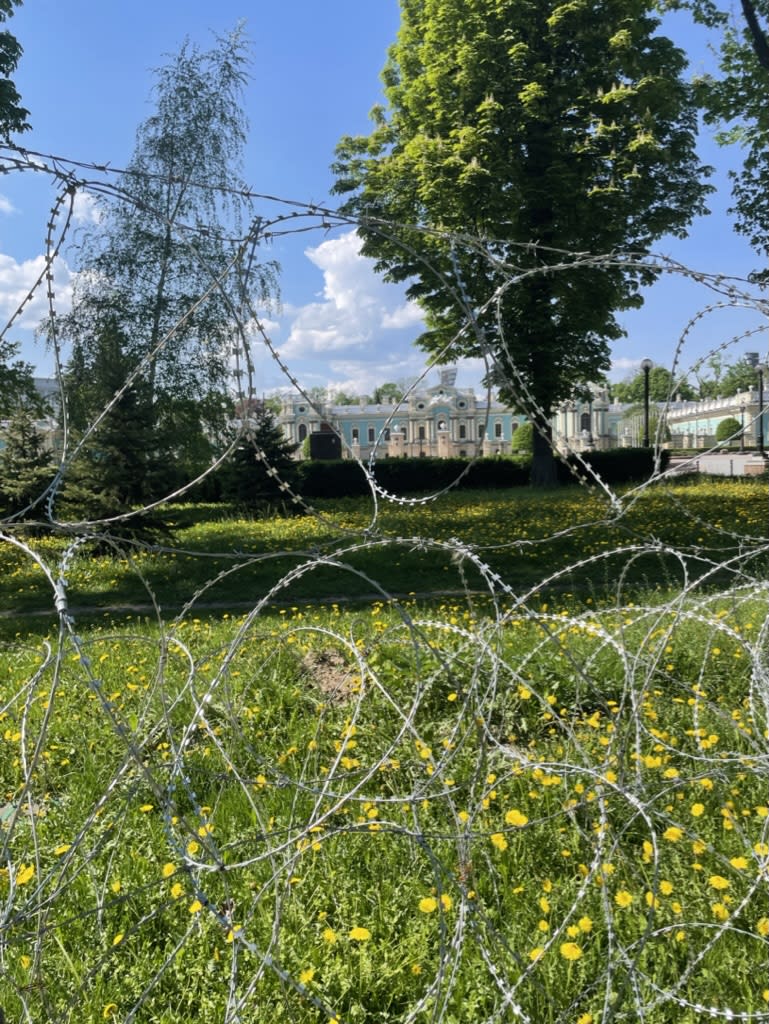
Though the country still struggles with political corruption that erodes public trust in institutions and stands in the way of EU and NATO membership, Ukrainians are generally willing to give President Zelenskyy leniency while he prioritizes the country’s war effort. Zelenskyy was elected on an anti-corruption platform in 2019, vowing to hold oligarchs accountable through the justice system. But overhauling domestic politics took a back seat when the country was invaded by Russia in 2022, as oligarchs controlled many of the resources necessary to muster a strong national defense.
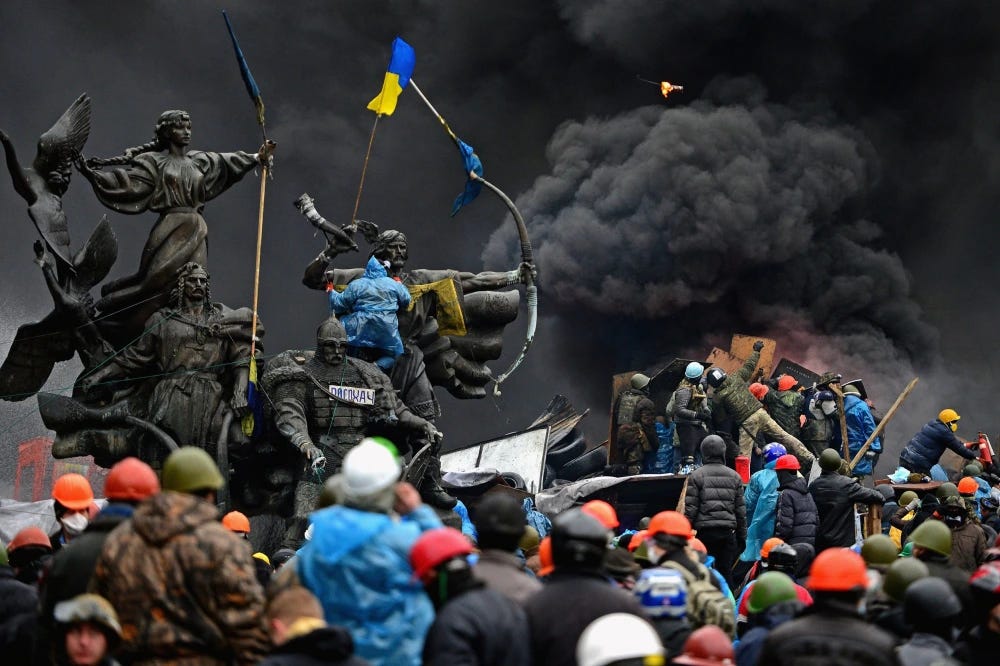
The progressive youth of Ukraine, like Nika, see this compromise as necessary, but temporary. Nika remains confident that good governance reform in Ukraine will come with time, even if Ukrainians have to take to the streets and make their demands heard from the Maidan.
prove he didn’t! per his own admin, due process rights don’t exist anymore
So interesting. I learn so much from this contributor.