


When sirens sound here in Kyiv, warning of a Russian air assault, most locals continue to go about their business without flinching.
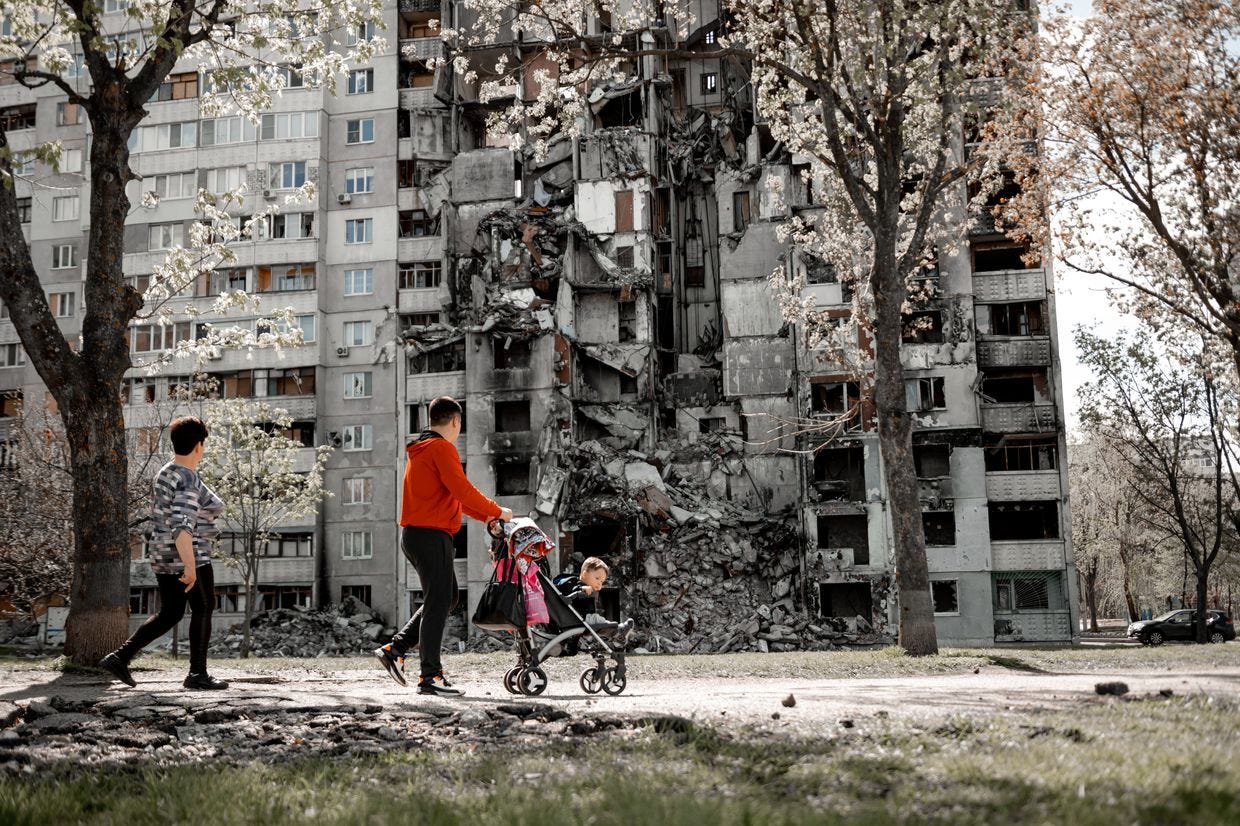
Desensitization occurs when the brain is overwhelmed by stimuli, and it must determine whether signals are truly life-threatening. An alarm bell does not cross the panic threshold in the same way that an Iranian-made Shahed drone humming outside one’s window does. Threat levels can be difficult to assess at a single point in time, especially with limited information about trajectory or rate of change.
But when it comes to Donald Trump, we do know the trajectory and rate of change; Trump’s impact on the health of American democracy does not require carefully parsing out causal variables. It is this “analysis paralysis” that may account for why so many Americans have difficulty seeing Trump’s second administration as a lethal drone outside the window of US democracy. Still, we have an opportunity to resist and refuse to go gently into the light.
There is no time to confirm Trump’s danger with empirical studies that track the rise and decline of democracies, which are inherently reactionary1. Varieties of Democracy’s (V-Dem) annual report tracking such trends came out last week, but only includes data through the end of 2024, prior to Trump’s second inauguration. Nevertheless, incoming data points from Trump’s first hundred days in office show a rapid descent into autocracy.

"If it continues like this, the United States will not score as a democracy when we release [next year's] data," said Staffan I Lindberg, head of the V-Dem, run out of Sweden's University of Gothenburg. Lindberg added, "if it continues like this, democracy [there] will not last another six months."
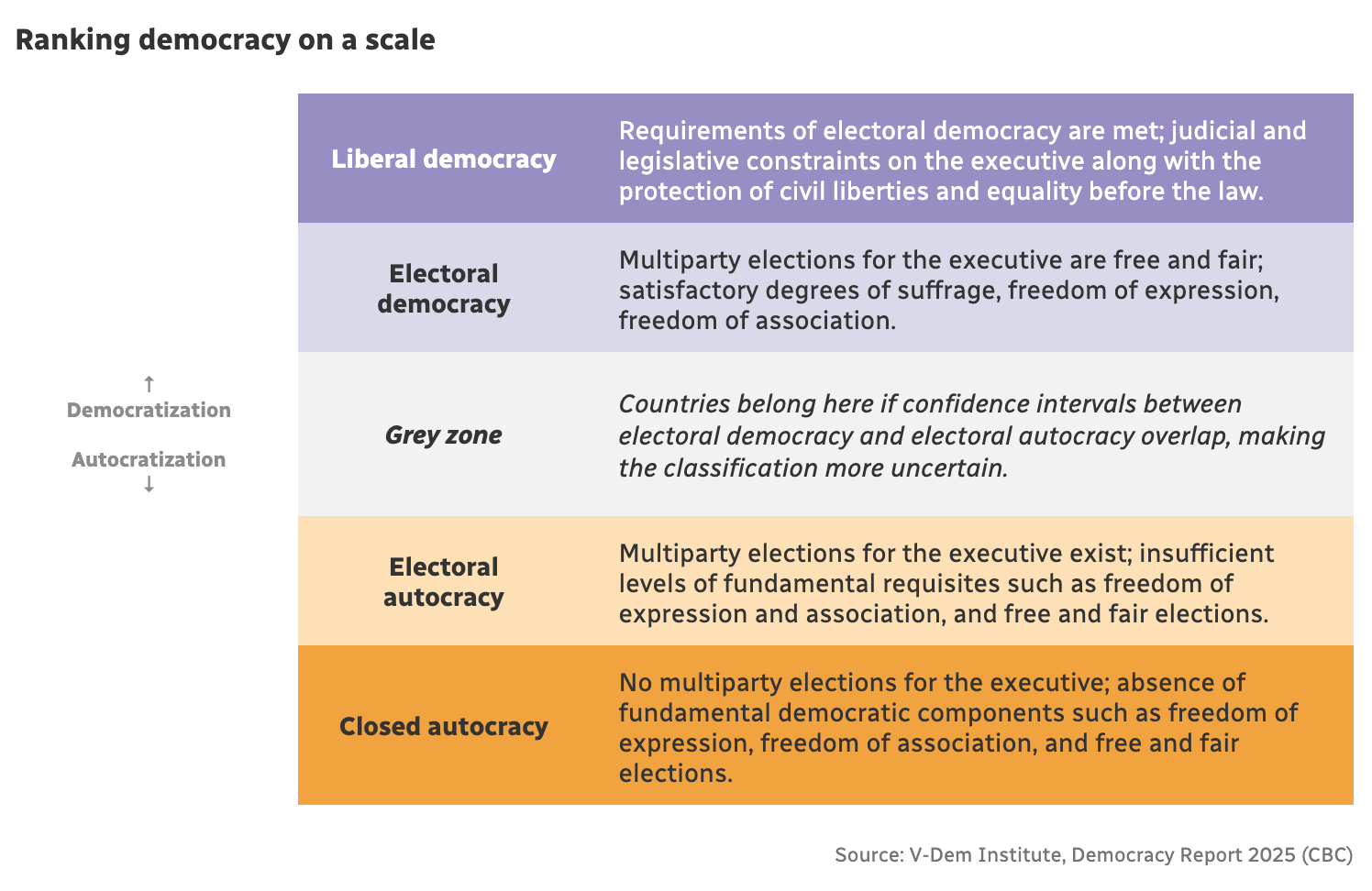
The United States scored 75 out of 100 in the 2025 report, toward the lower bound of the “liberal democracy” bucket. Soon, America will slide into the grey zone and subsequently “electoral autocracy.” And while the descent into autocracy can come as quickly as pressing a detonator, re-democratizing is a steep uphill climb that will require enormous investments of energy and resources.2

What has Trump done to concern Lindberg?3 Well, he’s following the playbook of Adolph Hitler, detailed in Timothy W. Ryback’s piece “How Hitler Dismantled a Democracy in 53 Days,” published in The Atlantic in January 2025.4
Hitler
Tuesday, March 21, 1933, an Article 48 decree was issued amnestying National Socialists convicted of crimes, including murder, perpetrated “in the battle for national renewal.” Men convicted of treason were now national heroes. The first concentration camp was opened that afternoon, in an old brewery near the town center of Oranienburg, just north of Berlin.
Trump
Pardoned 1,500 criminals who supported him and called his predecessor's pardons void and vacated;
instructed Salvadorian President to build more prisons to jail Americans.
Hitler
Wilhelm Frick, Hitler’s minister of the interior, undermined states’ rights and imposed bans on left-wing newspapers—including the Communist daily The Red Banner and the Social Democratic Forward.
Trump
Threatened numerous universities with sanctions;
drafted a memo to Congress outlining its intent to end nearly all federal funding for public media, which includes NPR and PBS;
gave a bitterly partisan speech at the Department of Justice, demanding the prosecution of the media and certain adversaries.
Hitler
Campaigned on the promise of draining the “parliamentarian swamp” —den parlamentarischen Sumpf—
Appointed Hermann Göring as acting state interior minister of Prussia, the federated state that represented two-thirds of German territory. Göring was tasked with purging the Prussian state police, the largest security force in the country after the army, and a bastion of Social Democratic [opposition party] sentiment.
Trump
Fired independent agency watchdogs without process and purged apolitical police and military brass;
called for a judge who ruled against him to be impeached, eliciting a response from Chief Justice Roberts;
the FBI arrested Wisconsin judge Hannah Dugan for allegedly helping an undocumented defendant avoid arrest by ICE agents.
Hitler
Frick had responsibility over the republic’s federated system, as well as over the country’s electoral system and over the press. Frick was the first minister to reveal the plans of Hitler’s government: “We will present an enabling law to the Reichstag that in accordance with the constitution will dissolve the Reich government.”
Trump
Unilaterally deleted federal programs, and an entire organization, created by U.S. Congress;
invoked a 227-year-old war measures law during peacetime — for the first time ever — to deport accused gang members without due process. And, most importantly, when that deportation plan wound up in court, he may have — although it's still in dispute — defied a court order, cracking the ultimate constitutional safeguard.
Hitler
A Schiesserlass, or “shooting decree,” followed. This permitted the state police to shoot on sight without fearing consequences. “I cannot rely on police to go after the red mob if they have to worry about facing disciplinary action when they are simply doing their job,” Göring explained. He accorded them his personal backing to shoot with impunity. “When they shoot, it is me shooting,” Göring said. “When someone is lying there dead, it is I who shot them.”
Trump
In an interview with ABC News’ Terry Moran, Trump refused to acknowledge that due process is required by law in deportation cases, regardless of citizenship status. Mirroring Göring, Trump cites the need for efficient deportation as justification for circumventing the legal system.
Even more troubling, is that Moran’s minor concession that American citizens have yet to be deported without due process is no longer accurate. In recent days the case of a 2-year old American citizen who was deported with their mother has generated public outcry. Moreover, green card holders who are in the United States legally have been detained and face deportation, while student visas have been revoked preemptively to justify deportation without a hearing.
Trump’s claims that his administration’s different “standard” only applies to criminals and those who entered the US unlawfully. Quickly, Trump’s definition of criminality twists and warps to include additional “enemy” groups. Clearly, Trump’s “standard” applies to anyone who poses a threat to his power, particularly judges, politicians, academics, lawyers, journalists, and activists including student protestors.
Trump and his administration’s autocratic actions will be accounted for in the 2026 V-Dem report, but it will be too late. Congress must act now to stop Trump’s consolidation of power.
In Nazi Germany, Centrists, as well as the representatives of the Bavarian People’s Party, voted in favor of Hitler’s enabling law, despite reservations.
Reinhold Maier, the leader of the German State Party, expressed concern about what would happen to judicial independence, due process, freedom of the press, and equal rights for all citizens under the law, and stated that he had “serious reservations” about according Hitler dictatorial powers. But then he announced that his party, too, was voting in favor of the law, eliciting laughter from the floor.
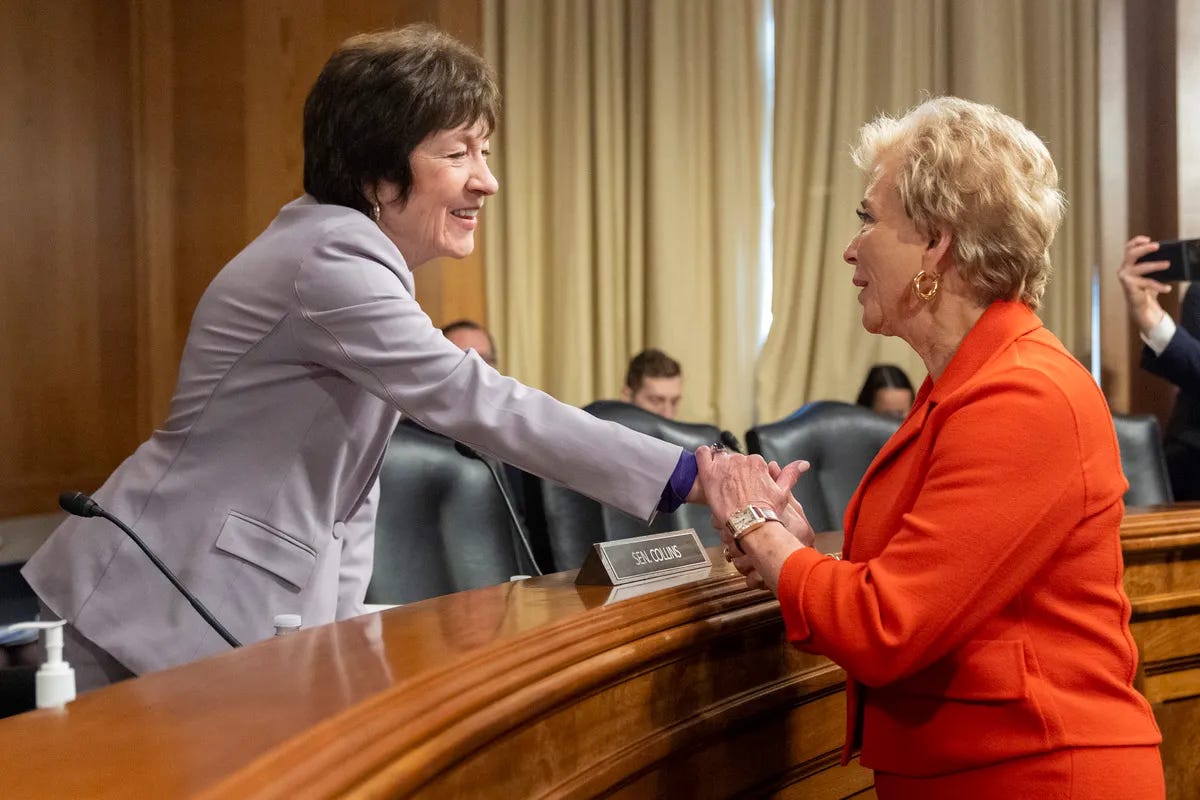
Sound familiar? Senator Susan Collins’ (R-ME) consistently expresses her deep concern when commenting on Trump’s disregard for the constitution and rule of law. Collins, one of seven Republicans who voted to convict Trump for the January 6 insurrection, refused to cast a vote for him in November. Instead, she wrote-in Nikki Haley, a symbolic gesture that did not effectively block Trump’s return to the White House. Now is the time for Collins to pledge support for impeachment, initiating the bipartisan support required to remove Trump from office. Trump’s unconstitutional behavior is deeply concerning to say the least, tyrannical at face value, and warrants an impeachment trial.
Hitler’s rise required the complicity of those around him who underestimated their own power and responsibility.
Across the aisle, House Democratic Caucus chair Rep. Pete Aguilar (D-CA) is abetting Trump’s consolidation of power. Earlier this week articles of impeachment were filed by Rep. Shri Thanedar (D-MI), with several other House members signing on as cosponsors. But when Aguilar came out against impeachment proceedings, Thanedar’s support from co-sponsors dwindled.
Aguilar prefers a path of meek submission over challenging the Republican majority to a public debate on impeachment. “We don’t have any confidence that House and Senate Republicans would do their jobs. And so this is not an exercise that we’re willing to undertake,” he capitulated.
Aguilar is letting Republicans off the hook despite the majority of US voters saying “it's up to Congress to do their job, defend the Constitution, and impeach and remove Donald Trump from office for his grave abuses of power,” according to a poll published last Friday.
Not only does Aguilar refuse to hold Republicans’ feet to the flames, his position in minority party leadership effectively suffocates Thanekar’s popular grassroots spark. As frustrating as Aguilar’s faint-heartedness may be, infighting among democracy’s defenders will only serve Trump’s interests.
I have no interest in earning a loser’s participation trophy for being on the “right side of history.” A privilege reserved for those who survive Trump’s authoritarianism, moral superiority carries little utility.

If and when Republicans abdicate their responsibility to protect American civil liberties, I will woefully admit that impeachment was ineffective. But ineffectiveness is preferable to apathy, which only reinforces public distrust in our political system. If impeachment fails and Trump remains in office, we will pick ourselves up, dust ourselves off, and fight another day. We need not wait for more egregious violations to occur before disempowering Trump. “Sitting, hoping, waiting, wishing,” is a timeless Jack Johnson song, but a death sentence for American democracy.
V-Dem provides a multidimensional and disaggregated dataset that reflects the complexity of the concept of democracy as a system of rule that goes beyond the simple presence of elections. They distinguish between five high-level principles of democracy: electoral, liberal, participatory, deliberative, and egalitarian, and collect data to measure these principles.
A well-written and welcome commentary. Keep rollin’ Mr. Ward
Such an informative albeit frightening post. Thank you for all the amazing and courageous work you are doing.